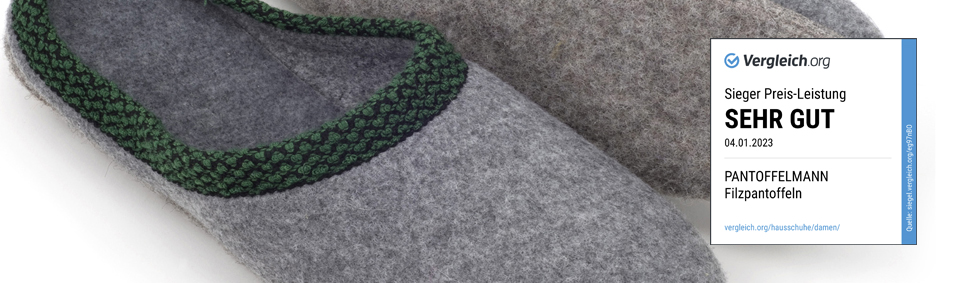
Felt Slippers for Men: What Matters in Material, Sole and Fit
A good pair of felt slippers for men often lasts for many years and is still worn every day. That is exactly what makes the choice more important than it may seem at first glance. Material, sole and shape determine whether a model is merely okay or becomes a dependable everyday companion. We show you what to look for and which model suits which purpose.
Not all felt is the same, and the sole also has a bigger impact in everyday use than many people think. Once you understand these two points, you will find the right pair of house shoes much faster instead of buying something that does not fit your needs.
Why Felt Is So Popular for Men’s House Shoes
Felt combines several qualities that work well in everyday home life. The material provides pleasant warmth without immediately feeling stuffy, while maintaining a calm, dry wearing feel. It is also quite robust: well-made felt withstands years of daily wear without losing its shape.
For many men, there is also a practical advantage: felt slippers are uncomplicated. They are quick to slip on, fit visually into almost any living space and look neither too sporty nor too playful. This simplicity is one of the main reasons why felt has remained popular in men’s models for years.
Not All Felt Is the Same
A common misconception is that every felt slipper is made of pure wool. In fact, different materials are used depending on the model, and this has a direct effect on the wearing feel. Pure wool felt feels classic and warm, while blends of wool and polyester can be more robust or better at retaining their shape.
When making a purchase decision, it is therefore always worth checking the material information for the specific model, not just its appearance.
|
Material type |
How it feels |
What to look for |
|
Wool felt (100% wool) |
natural, warm and comfortable, especially high-quality |
a good choice if you want a classic, calm wearing feel |
|
Felt blend (wool/polyester) |
more robust and shape-retaining, often easy-care |
check the blend ratio on the model, such as 70/30 or 30/70 |
|
Felt (100% polyester) |
functional and suitable for everyday use |
not automatically worse, but different to the touch than wool felt |
The Sole Determines How the Slipper Can Be Used
With felt slippers, the upper material is usually the first thing people look at, but the sole is just as important in everyday use. It determines whether a model is intended only for indoor use or can also handle short trips outdoors. Depending on the type of sole, the sensible area of use changes significantly.
If you wear your house shoes exclusively indoors, a light sole is a good choice. But as soon as trips to the trash bin, the basement or the terrace are part of daily life, a more robust option is worthwhile.
|
Type of sole |
Benefits |
Best suited for |
|
Felt sole |
quiet, light and floor-friendly |
quiet indoor areas and a classic slipper feel |
|
Rubber sole |
grippier, more robust and suitable for everyday use |
households with short trips outdoors |
|
Sturdy clog sole |
firm support and a defined walking feel |
anyone who wants more structure and a secure stance |
Which Model Suits Which Need
The choice of model is closely linked to how and where you wear the slippers. Felt works in very different shapes, from the classic slipper to the sturdy clog, and each version has its own character. Three main types can be clearly distinguished.
Classic Felt Slippers
For anyone looking for a calm, uncomplicated house shoe, classic felt slippers are usually the first choice. They are light, quick to put on and offer the typical warm felt feel. They are a good option for anyone who mainly wears them indoors.
Felt Clogs with Footbeds
If you want more support and a more defined walking feel, felt clogs are more likely to be the right choice. An anatomically shaped footbed and a stable sole provide more structure, especially if you stand or walk a lot at home. These models feel less soft, but more stable.
Overslippers and Robust Models
For special uses, there are more robust versions such as overslippers, which can also be worn over shoes or used in commercial settings. They are a category of their own, but they are worth knowing about if your house shoe needs to do more than simply provide comfort at home.
Care and Selection
Felt seems more delicate than it actually is in everyday use. Much can be handled well by airing, careful brushing or spot cleaning, without the need for complicated care. It is important to follow the instructions for the specific model, because what makes sense for one type of felt may not suit another.
When choosing, it helps to ask yourself one honest question in advance: where and how often will the slippers be worn? Once you have clarified that, it becomes easier to choose between a soft indoor model and a robust companion for short trips. Take your time to browse our selection of felt slippers and felt clogs with footbeds.
Frequently Asked Questions
Are all felt slippers for men made of pure wool?
No. Depending on the model, pure wool felt, blends of wool and polyester or pure polyester felt may be used. That is why it is always worth checking the material information on the specific product before buying.
When is a rubber sole more useful than a felt sole?
A rubber sole is more practical if short trips outdoors are also involved, such as going to the terrace or the basement. For quiet indoor areas, a light felt sole is usually sufficient.
How long does a good felt slipper last?
With high-quality workmanship, good felt slippers often accompany their wearers for many years, even with daily use. The key factors are material quality and a sole that suits how the slippers are used.
What distinguishes a felt clog from a classic slipper?
A felt clog generally has a shaped footbed and a more stable sole. This gives it more support and a more defined walking feel than a classic, soft slipper.
Can felt slippers be washed?
That depends on the material. Many wool felt models can be gently cleaned on a wool wash cycle, while others are better cleaned only in specific spots. Follow the care instructions for the specific model.